
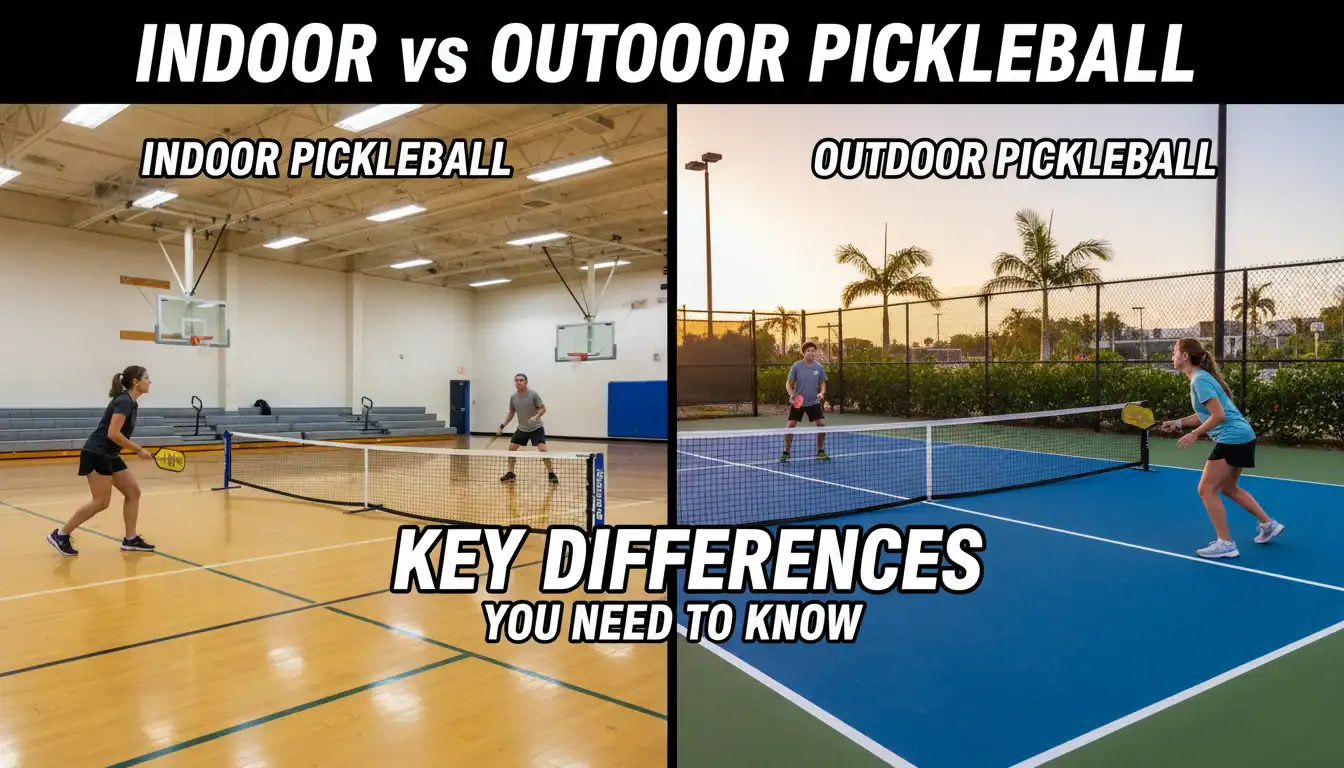
If you’ve recently picked up a pickleball paddle, you’re probably hooked. But as you play, you might wonder: “What’s the real difference between indoor and outdoor pickleball?” This seemingly simple question hides a world of differences. From the type of balls and paddles to the shoes on your feet and the courts you play on, each version of the game offers a unique experience.
Whether you’re strategizing on a smooth indoor court or rallying in the unpredictable outdoors, the environment can shape how you play. This guide dives deep into everything you need to know about indoor vs outdoor pickleball, helping you master the game wherever you play it. Let’s settle the debate and get you prepped, geared, and ready to dominate your next match!
Understanding the Game: Indoor vs Outdoor Pickleball Basics
At first glance, pickleball may look the same whether you’re playing inside a gym or outside on a windy day. But the reality is far from simple—the environment has a major influence on the game. Indoor pickleball is generally played in controlled conditions, meaning there are no variables like wind or temperature. Outdoor pickleball, on the other hand, comes with all the unpredictability of nature.
Let’s break down the major aspects:
1. Balls: 26 Holes vs 40 Holes
The most obvious difference between indoor and outdoor pickleball is the ball. Here’s what you need to know:
- Indoor Pickleball Balls: These balls are lighter, softer, and have 26 holes. They are easy to control and offer slower gameplay, making them ideal for finesse shots and strategic play. Popular options include brands like Onix Fuse or Gamma indoor balls.
- Outdoor Pickleball Balls: Outdoor balls are heavier and harder, made to withstand wind and rough surfaces. They feature 40 smaller holes, which improve aerodynamics and keep the ball steady in windy conditions. Some of the best outdoor pickleball balls include Dura Fast 40 and Franklin X-40.
Pro Tip: You should avoid using indoor balls outdoors as they cannot handle the elements and wear out quickly.
2. Paddles for Indoor vs Outdoor Pickleball
The right paddle can make or break your game—whether indoors or outdoors. The surface of the court and external factors play a big role in paddle preferences.
- Indoor Pickleball Paddles: Since indoor gameplay is often slower and more controlled, softer paddles with greater touch and finesse are preferred. These paddles typically have a larger sweet spot.
- Outdoor Pickleball Paddles: Outdoor conditions demand durable paddles with more power and grit. Players often go for textured surfaces to improve spin and counteract the heavier outdoor ball.
3. Courts: Indoor vs Outdoor Pickleball Court Surfaces
Are indoor and outdoor pickleball courts the same size? The short answer is yes! Both indoor and outdoor courts measure 20 feet by 44 feet, regardless of where the game is played.
What varies significantly is the court surface:
- Indoor Courts: Commonly feature smooth wood or gym flooring, offering a consistent ball bounce.
- Outdoor Courts: Use rougher materials like concrete or asphalt, which can influence the bounce and speed of the ball. Some outdoor courts use acrylic coatings for better grip.
4. Shoes for Indoor vs Outdoor Play
Shoes are another critical gear component. Wearing the wrong footwear can affect your performance and even lead to injury.
- Indoor Pickleball Shoes: Designed with non-marking soles, these shoes provide excellent traction on gym floors.
- Outdoor Pickleball Shoes: Because outdoor surfaces can be rough and slippery, these shoes offer additional durability and grip.
Investing in the right shoes is essential to avoid unnecessary strain and prolong your performance.
Indoor and Outdoor Pickleball: Key Gameplay Differences
Each environment comes with a unique set of challenges and considerations. Here’s a quick comparison:
| Feature | Indoor Play | Outdoor Play |
|---|---|---|
| Weather Conditions | Controlled, consistent indoor climate. | Varies with weather; can include wind, sun, temperature changes. |
| Ball Types | 26-hole balls; light and soft. | 40-hole balls; heavy and durable. |
| Court Surface | Smooth, gym flooring. | Rougher, outdoor terrain. |
| Game Speed | Slower-paced; more strategic. | Faster; focus on power and endurance. |
Picking the Right Setup for Your Game
While both indoor and outdoor pickleball offer their own appeal, the right fit for you depends on personal preference, playing style, and environmental factors.
- Prefer precise and finesse-oriented play? Go for indoor pickleball.
- Love a challenge and need to play year-round? Embrace the unpredictability of outdoor pickleball.
Can I use the same ball indoors and outdoors? Technically yes, but it’s not ideal. Indoor balls don’t perform well outdoors due to wind and surface wear.
Frequently Asked Questions (FAQs)
Yes, both are 20 feet by 44 feet, but the surface differs—smooth indoors and rough outdoors.
Outdoor balls have 40 smaller holes for stability in the wind; indoor balls have 26 larger holes.
Not ideal. Indoor balls are softer and wear out outdoors, while outdoor balls are too heavy for indoor use.
Use 26-hole balls for indoor play and 40-hole balls for outdoor games. Keep both if you play in mixed environments.